

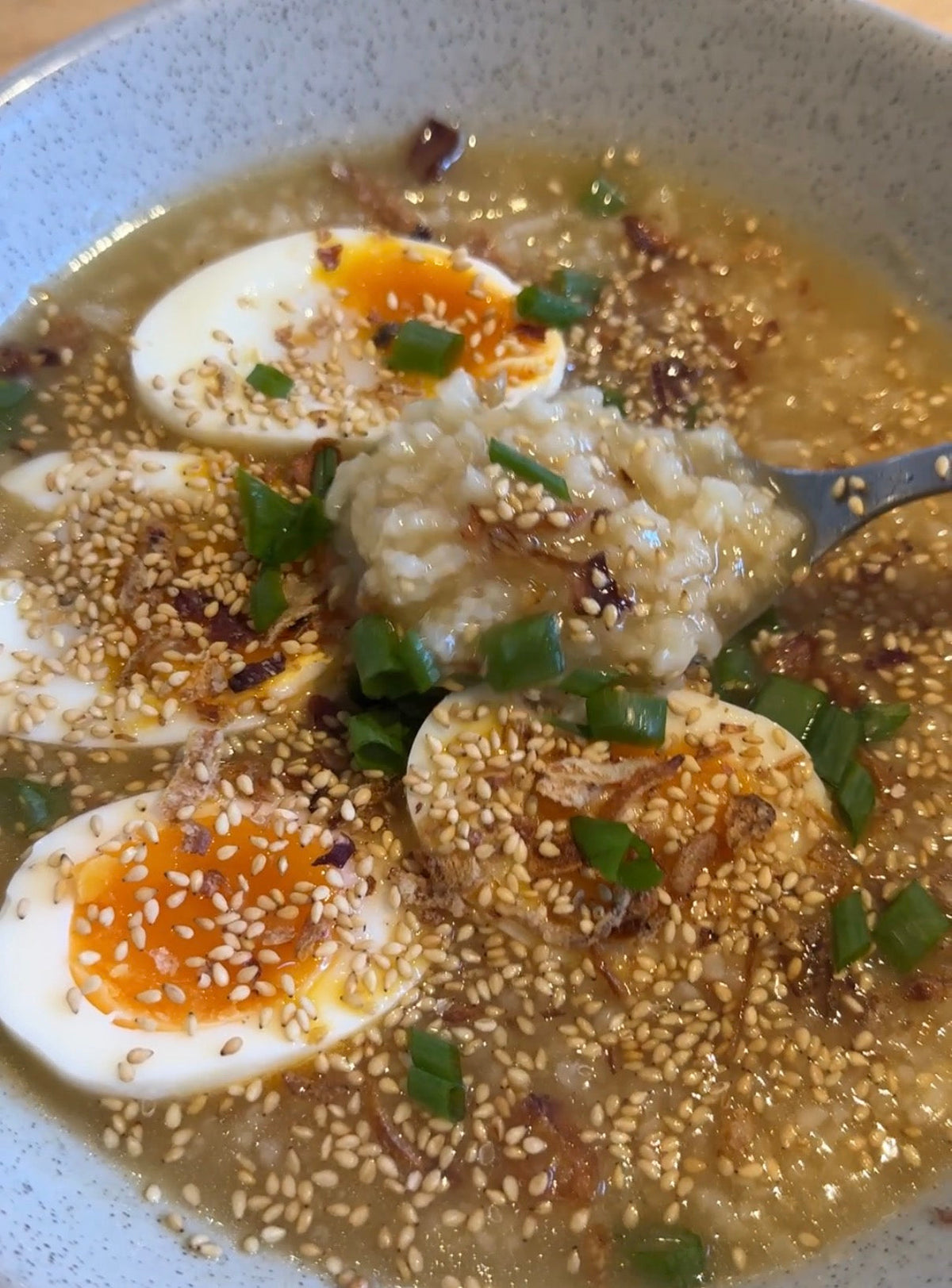
This chicken congee recipe is one of my favourite warm breakfasts for digestion, especially when the weather is cold or the body feels like it needs something deeply nourishing. Congee, also known as Chinese rice porridge, is simple, soft, broth-based and easy to digest, which is why it has been loved for generations in Chinese cooking and Traditional Chinese Medicine diet therapy.
From a Traditional Chinese Medicine perspective, gut health is closely connected to the Spleen and Stomach. These organ systems are responsible for transforming food into energy, nourishment and Qi. When digestion feels weak, cold, bloated or sensitive, TCM often favours warm, cooked meals over raw, cold or overly heavy foods.
Why Congee Is a Beautiful Gut Health Breakfast
Congee is a slow-cooked rice porridge made by simmering rice in plenty of liquid until it becomes creamy and soft. Because the grains are broken down so gently, congee is often considered one of the most comforting foods for digestion. It is warm, hydrating, filling without being heavy, and easy for the body to process.
This makes congee a beautiful gut health breakfast, especially if your digestion feels sluggish, sensitive or depleted. It is also a lovely option during winter, after illness, postpartum, or anytime your body is craving simple, nourishing food.
This version is made with chicken broth, ginger, garlic and shiitake mushrooms. It has that cosy savoury flavour while still being gentle on the digestive system. The ginger brings warmth, the rice provides easy nourishment, and the shiitake mushrooms give depth without making the congee feel too rich.
The TCM Body Clock: Why Breakfast Timing Matters
In the Traditional Chinese Medicine body clock, the Stomach is considered most active between 7am and 9am, followed by the Spleen between 9am and 11am. This is one reason why TCM often encourages a proper warm breakfast rather than skipping breakfast or starting the day with iced drinks, smoothies or raw foods.
A warm breakfast for digestion, like chicken congee, works beautifully with this rhythm. The idea is to support the Spleen and Stomach when they are most ready to receive and transform food. For anyone interested in TCM breakfast ideas, congee is one of the most classic and practical places to start.
Congee, Spleen Qi & Digestion in Traditional Chinese Medicine
In TCM, the Spleen likes warmth, rhythm and simplicity. Too many cold foods, irregular meals, excessive snacking or heavy greasy foods may place extra strain on digestion. When people talk about Spleen Qi deficiency in Chinese medicine, they are often referring to patterns where digestion feels weak, energy feels low, bloating is common, or the body feels like it is not transforming food well.
Of course, food is not a cure-all, but meals like congee can be a supportive part of a more nourishing routine. A warm bowl of chicken congee gives the body cooked grains, broth, protein and warming aromatics in a form that feels gentle and grounding.
Why This Chicken Congee Recipe Supports Gut Health
- Slow-cooked rice: creates a soft Chinese rice porridge texture that is easy to digest.
- Chicken broth: adds depth, warmth and nourishment.
- Ginger: traditionally used in TCM cooking to warm the middle and support digestion.
- Shiitake mushrooms: add savoury flavour and make the congee more satisfying.
- Warm breakfast rhythm: aligns beautifully with TCM breakfast principles and the Spleen/Stomach time of day.
Chicken, Ginger & Shiitake Congee Recipe
Ingredients
- 1.5kg chicken drumsticks
- 3L water
- 5cm chunk ginger, half sliced and half minced
- Half a bunch spring onions
- 1 whole large onion, peeled
- 2 tbsp roasted sesame seed oil
- 3 garlic cloves, minced
- 300g sliced shiitake mushrooms
- 1 cup jasmine rice, rinsed
- Salt, to taste
- Sliced spring onions and sesame seeds, to serve
Method
- Combine the chicken drumsticks, water, sliced ginger, spring onions and whole onion in a large pot. Bring to the boil.
- Reduce to a simmer, keep the lid on and cook for 45 minutes.
- Carefully remove the chicken drumsticks and set aside to cool. Remove the meat from the bone. Strain the broth.
- Heat the roasted sesame seed oil over medium heat in a large pot. Fry the minced ginger and garlic for 30 seconds, until fragrant.
- Add the sliced shiitake mushrooms and sauté until soft, about 5 minutes.
- Add the rinsed jasmine rice and mix through the mushrooms, garlic and ginger.
- Measure out 9 cups of broth. If you are short, top up with water.
- Add the broth or water to the pot of rice. Mix through and bring to a boil.
- Reduce to low and cook covered for 1 hour, stirring occasionally, until the congee is thick, soft and creamy.
- Stir through the shredded chicken, season with salt to taste, and serve with sliced spring onions and sesame seeds.
When to Eat Congee for Digestion
Congee is especially lovely as a morning meal because it is warm, soft and grounding. If you are looking for foods for digestion that feel practical and realistic, this is a beautiful one to keep in rotation. It can be made ahead, reheated easily and adjusted with different toppings depending on the season.
For a TCM-inspired routine, try having congee during the morning Spleen and Stomach window rather than skipping breakfast and relying on coffee alone. This is a simple shift, but it can make breakfast feel more stabilising and nourishing.
Skin, Gut Health & Winter Nourishment
In Traditional Chinese Medicine, skin health is not seen as separate from digestion. The skin is nourished by what the body is able to digest, transform and circulate. This is why gut health, Spleen support and skin glow are so closely connected in holistic beauty.
When we support the body internally with warm, nourishing meals and externally with barrier-supportive skincare, the skin often feels more resilient. In winter especially, I love pairing warm foods like congee with skincare that hydrates, nourishes and locks in moisture.
Winter Skin Support From Yinera
A warm bowl of chicken congee supports nourishment from within, while a thoughtful winter skincare routine helps support your skin barrier from the outside. These Yinera favourites pair beautifully with a slow, nourishing winter rhythm.

Jing Creme
A rich tallow emulsion created to nourish dry, mature or depleted skin and support a healthy-looking winter glow.
Shop Jing Creme
Revitalising Serum
A glow-supporting serum with nourishing oils and botanical extracts to help skin look more radiant and revitalised.
Shop Revitalising Serum
Tallow Butter Balm
A rich finishing balm to help lock in hydration and protect dry winter skin from feeling tight, flaky or depleted.
Shop Tallow Butter BalmFrequently Asked Questions
Is congee good for gut health?
Congee can be a beautiful gut health breakfast because it is warm, soft, slow-cooked and easy to digest. It is commonly used in Traditional Chinese Medicine diet therapy as a gentle food for digestion and nourishment.
Is chicken congee easy to digest?
Yes, chicken congee is generally considered easy to digest because the rice is cooked with a large amount of liquid until soft and creamy. The broth-based texture makes it gentle, warming and comforting.
Why does TCM recommend warm breakfasts?
Traditional Chinese Medicine often recommends warm breakfasts because digestion is associated with warmth. Cold smoothies, iced drinks and raw foods may be harder on sensitive digestion, while warm foods like congee are considered more supportive for the Spleen and Stomach.
What time should I eat breakfast according to the TCM body clock?
According to the TCM body clock, Stomach time is between 7am and 9am, followed by Spleen time between 9am and 11am. This is why a warm, nourishing breakfast is often encouraged during the morning.
What is Spleen Qi deficiency?
In Traditional Chinese Medicine, Spleen Qi deficiency refers to a pattern where the digestive system may feel weak or under-supported. It is often discussed in relation to bloating, low energy, loose stools or a heavy feeling after meals. A TCM practitioner can assess this properly.
Is congee good in winter?
Yes, congee is especially comforting in winter because it is warm, broth-based and nourishing. Ginger, garlic and chicken broth make this chicken congee recipe particularly grounding during cold weather.
How does gut health relate to skin health in TCM?
In TCM, skin health is connected to digestion, nourishment and internal balance. When the Spleen and Stomach are supported, the body is better able to transform food into energy and nourishment, which may support a healthier-looking complexion.
Leave a comment
This site is protected by hCaptcha and the hCaptcha Privacy Policy and Terms of Service apply.