

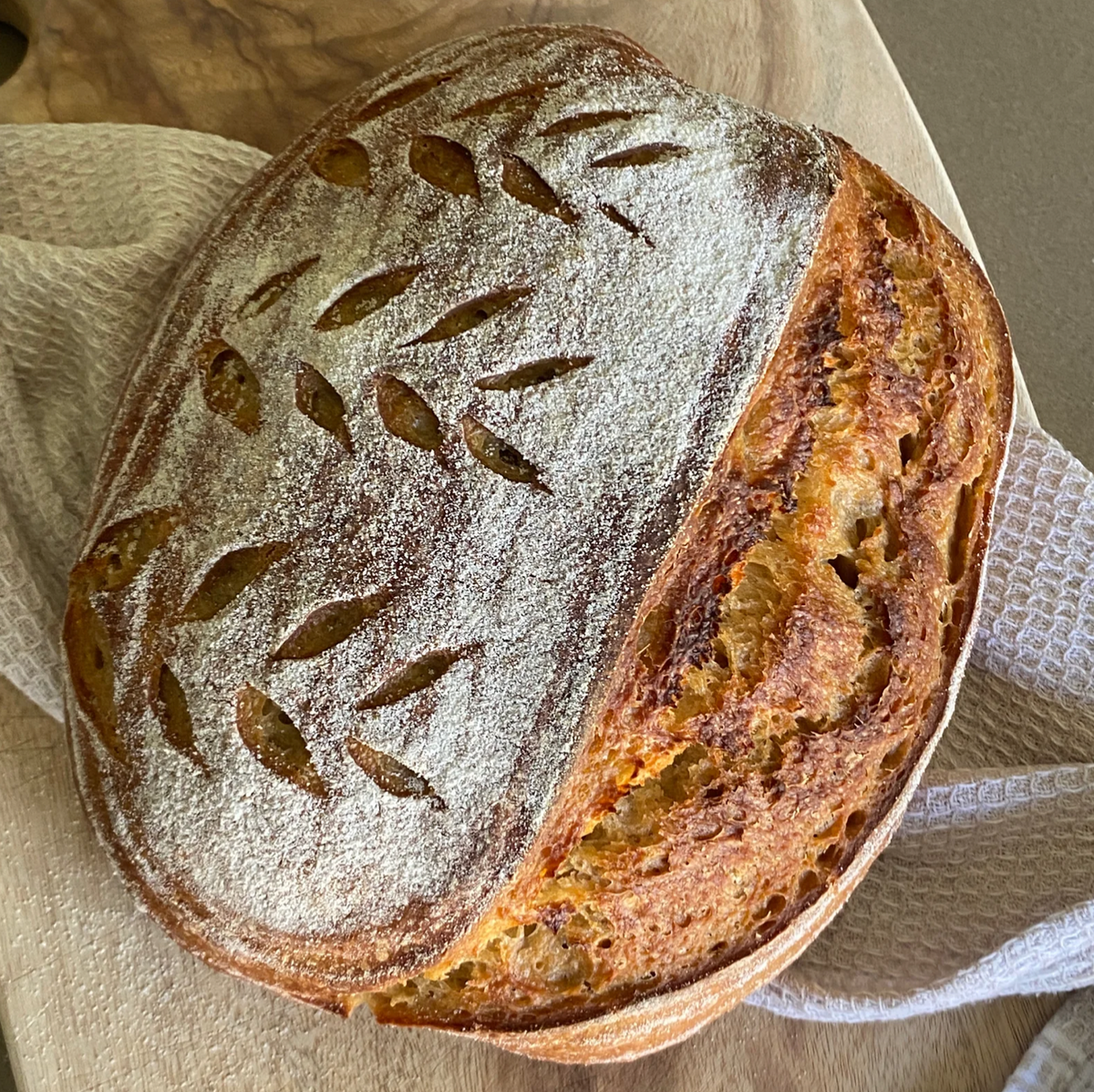
Sourdough making is a millennia-old technique, and there is something so grounding about bringing it back into your own kitchen.
It is a slow fermentation process where wild yeasts and beneficial bacteria develop naturally. This helps break down some of the compounds in grains that can make them harder to digest, while also creating that beautiful flavour, chewy texture and golden crust sourdough is loved for.
Once you have a healthy starter, you can use it for so much more than bread. Cinnamon rolls, cookies, pancakes, pizza bases, crackers — there are so many possibilities.
What You’ll Need
- Large mixing bowl
- Kitchen scale
- Banneton, around 24cm long
- Dutch oven or casserole dish, around 29cm long
- Razor blade or sharp knife
- Quality bread flour
- Rice flour, for dusting
- Filtered water
- Quality salt
- Glass jar for starter
If you do not have filtered water, use bottled water or let tap water sit overnight. Chlorine in tap water may interfere with fermentation.
How to Make a Sourdough Starter
Sourdough Bread Ingredients
- 80–100g active sourdough starter
- 375g filtered water
- 10–20g salt, depending on taste
- 500g bread flour
This makes approximately one 800g loaf.
Timing Tip
In colder months, I usually feed my starter in the morning, let it become active during the day, then mix the dough in the evening.
In warmer months, I often begin the whole process in the evening because fermentation moves faster in the heat.
Sourdough Bread Method
- Feed your starter with equal parts flour and water. Let it rise until active and doubled.
- Weigh the active starter, filtered water and salt into a large mixing bowl. Let it sit for 1 minute so the salt can dissolve.
- Add the bread flour and mix until a rough dough forms.
- Cover the bowl and rest for 30 minutes to 1 hour.
- Stretch and fold the dough 4–6 times, working around the bowl in a circle.
- Rest, then repeat the stretch and fold process 3 more times. You want 4 rounds total over about 2 hours.
- Cover the bowl with a damp towel, cling wrap or shower cap and leave to bulk ferment.
- In colder months, bulk ferment overnight for around 10 hours. In warmer months, ferment for around 6 hours. Adjust timing depending on your kitchen temperature.
- After bulk fermentation, shape the dough. Dust your banneton with rice flour and place the dough inside, smooth side down.
- Place the banneton in the fridge for 3–18 hours. You can bake the same evening or the next morning.
- Preheat your oven to 240°C with the Dutch oven inside. Make sure it is fully heated before baking.
- Remove the dough from the fridge and flip it onto baking paper. Score the top with a razor blade or sharp knife.
- Carefully transfer the dough into the hot Dutch oven using the corners of the baking paper.
- Place the lid on, put it in the oven and reduce the heat to 220°C.
- Bake with the lid on for 20 minutes.
- Remove the lid and bake for another 20–25 minutes, or until the crust is your desired colour.
- Carefully remove the bread from the dish and place it on a cooling rack.
- Wait at least 1 hour before slicing. The bread keeps cooking as it cools, even though it is very tempting to cut into it straight away.
Starter Amount & Fermentation
Your starter amount changes how quickly your dough ferments. If you need a longer fermentation, use less starter — around 50g or less.
If you want to speed things up, use more starter — around 100g or slightly more.
Once you get the hang of sourdough, you can experiment with timing and find what works best for your kitchen.
How to Serve
Enjoy with a thick layer of grass-fed butter. Truly the best.
Tag me on Instagram and show off your breads — I would love to see them.
Sourdough FAQ
Why is my sourdough not rising?
Your starter may not be active enough, your kitchen may be too cold, or the dough may need more time to ferment.
Can I use tap water?
Filtered water is best. If using tap water, let it sit overnight first so the chlorine can evaporate.
Why do I need rice flour for the banneton?
Rice flour helps stop the dough from sticking because it does not absorb moisture as quickly as wheat flour.
Can I bake without a Dutch oven?
A Dutch oven gives the best crust because it traps steam. If you do not have one, use a heavy oven-safe casserole dish with a lid.
Can I slice the bread straight away?
It is best to wait at least 1 hour. The crumb continues setting as the bread cools.
1 comment
Is there any specific bread flour you prefer using ?
Sherifa
Leave a comment
This site is protected by hCaptcha and the hCaptcha Privacy Policy and Terms of Service apply.